
{ "@context": "https://schema.org", "@graph": [ { "@type": "Organization", "@id": "https://compareinternet.com/#organization", "name": "Blog", "logo": { "@type": "ImageObject", "@id": "https://compareinternet.com/#logo", "url": "https://content.isg.us/wp-content/uploads/2023/03/compare-internet-logo-compress.svg", "contentUrl": "https://content.isg.us/wp-content/uploads/2023/03/compare-internet-logo-compress.svg", "caption": "Blog", "inLanguage": "en-US", "width": "144", "height": "63" } }, { "@type": "WebSite", "@id": "https://compareinternet.com/#website", "url": "https://compareinternet.com/", "name": "https://compareinternet.com/", "publisher": { "@id": "https://compareinternet.com/#organization" }, "inLanguage": "en-US" }, { "@type": "ImageObject", "@id": "https://content.isg.us/wp-content/uploads/2026/06/header-cane.png", "url": "https://content.isg.us/wp-content/uploads/2026/06/header-cane.png", "width": "1200", "height": "750", "caption": "", "inLanguage": "en-US" }, { "@type": "BreadcrumbList", "@id": "https://compareinternet.com/blog/why-verizon-5g-is-the-best-internet-for-hurricane/#breadcrumb", "itemListElement": [ { "@type": "ListItem", "position": "1", "item": { "@id": "https://compareinternet.com/", "name": "Home" } }, { "@type": "ListItem", "position": "2", "item": { "@id": "https://compareinternet.com/blog/", "name": "Blog" } }, { "@type": "ListItem", "position": "3", "item": { "@id": "https://compareinternet.com/blog/why-verizon-5g-is-the-best-internet-for-hurricane/", "name": "Why Verizon 5G is the Best Internet for Hurricane Season " } } ] }, { "@type": "WebPage", "@id": "https://compareinternet.com/blog/why-verizon-5g-is-the-best-internet-for-hurricane/#webpage", "url": "https://compareinternet.com/blog/why-verizon-5g-is-the-best-internet-for-hurricane/", "name": "DISH vs Cable | Infinity DISH", "datePublished": "2026-06-03T12:52:46+00:00", "dateModified": "2026-06-03T12:52:46+00:00", "isPartOf": { "@id": "https://compareinternet.com//#website" }, "primaryImageOfPage": { "@id": "https://content.isg.us/wp-content/uploads/2026/06/header-cane.png" }, "inLanguage": "en-US", "breadcrumb": { "@id": "https://compareinternet.com/blog/why-verizon-5g-is-the-best-internet-for-hurricane/#breadcrumb" } }, { "@type": "Person", "@id": "https://compareinternet.com/caroline-lefelhoc/", "name": "Caroline Lefelhoc", "url": "https://compareinternet.com/caroline-lefelhoc/", "image": { "@type": "ImageObject", "@id": "https://content.isg.us/wp-content/uploads/2025/10/c76ba349b023feebd718512d8358a00f.png", "url": "https://content.isg.us/wp-content/uploads/2025/10/c76ba349b023feebd718512d8358a00f.png", "caption": "Caroline Lefelhoc", "inLanguage": "en-US" }, "worksFor": { "@id": "https://compareinternet.com/" } }, { "@type": "BlogPosting", "headline": "Why Verizon 5G is the Best Internet for Hurricane Season ", "keywords": "Internet for Hurricane", "datePublished": "2026-06-03T12:52:46+00:00", "dateModified": "2026-06-03T12:52:46+00:00", "articleSection": "Blog", "author": { "@id": "https://compareinternet.com/caroline-lefelhoc/", "name": "Caroline Lefelhoc", "url": "https://compareinternet.com/caroline-lefelhoc/" }, "publisher": { "@id": "https://compareinternet.com/#organization" }, "description": "Here's why Verizon's 2026 storm prep investments make it the most resilient internet for hurricane zone residents.", "name": "Why Verizon 5G is the Best Internet for Hurricane Season ", "@id": "https://compareinternet.com/#richSnippet", "isPartOf": { "@id": "https://compareinternet.com/#webpage" }, "image": { "@id": "https://content.isg.us/wp-content/uploads/2026/06/header-cane.png" }, "inLanguage": "en-US", "mainEntityOfPage": { "@id": "https://compareinternet.com/#webpage" } }, { "@context": "https://schema.org", "@type": "NewsArticle", "articleBody": "<p><span style="font-weight: 400;">June is here! Warm summer sun, relaxing pool days, and…oh yeah, the return of hurricane season. The Gulf Coast, the Atlantic Seaboard, and the islands between them are all top hotspots for hurricanes each year. </span></p><p><span style="font-weight: 400;">When storms hit, the domino effect begins: The lights go out, the floodwaters rise, and the internet connection disappears for millions. If you live in Florida, Texas, Louisiana, the Carolinas, or anywhere else along the storm-battered Southeast coast, you&#8217;ve experienced days (or even weeks) without service after a hurricane, and you know how disorienting and dangerous that can be.</span></p><p><span style="font-weight: 400;">In 2026, Verizon made the most significant investment of any major carrier to ensure its towers come back online faster after a storm, making </span><a href="https://www.compareinternet.com/reviews/verizon/" target="_blank" rel="noopener"><span style="font-weight: 400;">Verizon 5G Home Internet</span></a><span style="font-weight: 400;"> the most hurricane-resilient internet service available to most households in the Southeast. That said, the right solution depends on where you live and which </span><a href="https://www.compareinternet.com/" target="_blank" rel="noopener"><span style="font-weight: 400;">internet providers</span></a><span style="font-weight: 400;"> are available near you. </span></p><p><span style="font-weight: 400;">[search_block]</span></p><h2><span style="font-weight: 400;">Why hurricanes knock out cable and fiber internet</span></h2><p><span style="font-weight: 400;">Cable internet and fiber connections travel through above-ground utility poles, buried cables, junction boxes, splice points, and central offices that aggregate and route traffic. A hurricane attacks every part of that chain. Storm surge and flooding seep into buried cable vaults and fiber splice points, causing shorts and failures that require hands-on repair. Wind brings down utility poles, snapping the cables strung between them. And when commercial power fails, every node in the system without backup generator capacity goes dark.</span></p><p><span style="font-weight: 400;">Multi-day and multi-week internet outages across hurricane-affected regions are the result. After Hurricane Helene made landfall as a Category 4 storm in late 2024 and tore through the Southeast from Florida to North Carolina, internet disruptions cascaded through multiple states for days. The physical damage to cable infrastructure is too widespread to be repaired quickly in the aftermath of a major storm.</span></p><p><span style="font-weight: 400;">Cell towers are not immune to storm damage either. But they are engineered to higher wind-resistance standards than typical utility poles, and when a tower structurally survives a storm, the two biggest reasons it might still fail are fiber backhaul damage (the fiber cable connecting the tower to the broader network) and loss of commercial power. Verizon has spent 2026 directly engineering around both of those failure modes.</span></p><p>&nbsp;</p><div id="attachment_10922" style="width: 1210px" class="wp-caption alignnone"><img aria-describedby="caption-attachment-10922" decoding="async" loading="lazy" class="size-full wp-image-10922 cap_c cap_cv c_color_w" src="https://content.isg.us/wp-content/uploads/2026/06/1-1.png" alt="hurricane storm" width="1200" height="600" srcset="https://content.isg.us/wp-content/uploads/2026/06/1-1.png 1200w, https://content.isg.us/wp-content/uploads/2026/06/1-1-300x150.png 300w, https://content.isg.us/wp-content/uploads/2026/06/1-1-1024x512.png 1024w, https://content.isg.us/wp-content/uploads/2026/06/1-1-768x384.png 768w" sizes="(max-width: 1200px) 100vw, 1200px" /><p id="caption-attachment-10922" class="wp-caption-text">Storm-prep investments</p></div><p>&nbsp;</p><h2><span style="font-weight: 400;">Verizon&#8217;s 2026 hurricane season preparations</span></h2><p><span style="font-weight: 400;">In May 2026, Verizon announced a significant leap forward in disaster preparedness ahead of the June 1 start of hurricane season. The announcements are worth understanding in detail because they directly affect whether your 5G home internet stays on during and after a storm.</span></p><h3><span style="font-weight: 400;">Digital Twin technology and AI-powered damage assessment</span></h3><p><span style="font-weight: 400;">One of the biggest delays in restoring cell service after a hurricane is the time required to physically inspect the damage. Crews can&#8217;t enter flooded areas or travel impassable roads, so towers sit offline while engineers wait for conditions to improve. Verizon&#8217;s new Digital Twin technology solves that problem by using drones to capture before-and-after imagery of cell sites, analyzed by artificial intelligence to identify damage without sending a single crew member into a storm-affected area. The moment a storm passes, Verizon engineers can see exactly which towers are damaged and where repair crews need to go first, compressing what used to be days of assessment into hours.</span></p><h3><span style="font-weight: 400;">Permanent satellite backhaul at storm-prone sites</span></h3><p><span style="font-weight: 400;">Perhaps the most impactful investment for 5G home internet customers is Verizon&#8217;s installation of permanent satellite backhaul at macro cell sites across storm-prone areas of the Southeast, combined with 100% backup battery and generator power at these critical locations. These sites are designed to continue processing cellular traffic even if both commercial power and fiber lines are completely destroyed. That means if a hurricane wipes out the fiber infrastructure in your neighborhood and takes down the power grid, a Verizon tower with satellite backhaul and backup power can still serve your 5G home internet gateway, as long as the tower structure itself survives the wind. </span></p><h3><span style="font-weight: 400;">The Multi-Orbit Off-Road Trailer</span></h3><p><span style="font-weight: 400;">Verizon has also introduced the Multi-Orbit Off-Road Trailer, a high-clearance vehicle purpose-built for disaster zones that can toggle between geostationary (GEO) and low-earth orbit (LEO) satellites to maintain connectivity regardless of which satellite systems are available. The trailer can create localized 5G hotspots for first responders and distribute 5G LEO connection kits to neighborhoods, then move on to restore larger cell sites. Verizon now has a fleet of 2,600 total satellite assets available for disaster response.</span></p><h3><span style="font-weight: 400;">The V Team Disaster Response Corps</span></h3><p><span style="font-weight: 400;">Separately, Verizon launched the V Team Disaster Response Corps in 2026, the first partnership between a telecommunications carrier and the American Red Cross that trains Verizon employee volunteers to deploy to Red Cross disaster shelters for up to two weeks at a time, providing connectivity support directly to affected communities.</span></p><h2><span style="font-weight: 400;">How 5G home internet compares to cable and fiber during a storm</span></h2><p><span style="font-weight: 400;">With </span><a href="https://www.compareinternet.com/cable-internet/" target="_blank" rel="noopener"><span style="font-weight: 400;">cable</span></a><span style="font-weight: 400;"> or </span><a href="https://www.compareinternet.com/fiber-internet/" target="_blank" rel="noopener"><span style="font-weight: 400;">fiber</span></a><span style="font-weight: 400;">, your internet depends on continuous physical infrastructure from the provider&#8217;s central office to your house. A downed utility pole between your house and the street, flooding in a cable vault two blocks away, or a generator failure at a local node means your service is gone until a technician can physically reach and repair the break. Since cable companies are dealing with thousands of simultaneous breaks across the affected area, your restoration can take days.</span></p><p><span style="font-weight: 400;">With 5G home internet, your gateway connects wirelessly to the nearest cell tower. There&#8217;s no cable running to your home that can be damaged or flooded. If the tower stays online, you stay online, and Verizon&#8217;s 2026 investments in satellite backhaul and backup power are specifically designed to keep towers online when the surrounding infrastructure fails. This is not to say 5G is invincible in a major storm. A direct structural hit to a cell tower can take it out just like anything else, and coverage varies by location. However, as a category, wireless home internet has a structural resilience advantage over wired service during major weather events.</span></p><p><a href="https://www.compareinternet.com/reviews/verizon/" target="_blank" rel="noopener"><span style="font-weight: 400;">Verizon 5G Home Internet plans start at $34.99 per month</span></a><span style="font-weight: 400;"> with no annual contract and no data caps, and self-installation takes about 15 minutes. The service is available in all 50 states, though coverage varies by address and is strongest in major metro areas and suburban markets across hurricane-exposed states.</span></p><h2><span style="font-weight: 400;">What hurricane-zone residents should know, by region</span></h2><p><span style="font-weight: 400;">Florida is the most hurricane-exposed state in the country, and Verizon 5G Home Internet is widely available across major Florida markets, including Miami, Tampa, Orlando, and Jacksonville. </span><a href="https://www.compareinternet.com/reviews/spectrum/" target="_blank" rel="noopener"><span style="font-weight: 400;">Spectrum</span></a><span style="font-weight: 400;"> and </span><a href="https://www.compareinternet.com/reviews/xfinity/" target="_blank" rel="noopener"><span style="font-weight: 400;">Xfinity</span></a><span style="font-weight: 400;"> are the dominant cable providers in most Florida markets, and both have histories of extended outages after major storms due to widespread cable damage.</span></p><p><span style="font-weight: 400;">The Texas Gulf Coast, including Houston, Corpus Christi, and the surrounding area, faces recurring exposure to hurricanes and tropical storms. Verizon 5G is available in the Houston metro area. </span><a href="https://www.compareinternet.com/reviews/att/" target="_blank" rel="noopener"><span style="font-weight: 400;">AT&amp;T Fiber</span></a><span style="font-weight: 400;"> is also present in Texas markets but still depends on physical cable infrastructure, making 5G the more resilient wireless backup during storm events.</span></p><p><span style="font-weight: 400;">In Louisiana, New Orleans and Baton Rouge have experienced some of the most catastrophic hurricane damage to telecom infrastructure in modern history, with post-Katrina and post-Ida outages lasting weeks in some areas. Verizon 5G Home Internet is increasingly available in both metros, making it a meaningful option for residents who have lived through extended service outages in past storms.</span></p><p><span style="font-weight: 400;">Along the coasts of Alabama, Mississippi, Georgia, and South Carolina, exposure to hurricanes and tropical storms is real, and Verizon 5G coverage is expanding across markets, including Savannah and Charleston. Residents in smaller coastal communities should check availability at their specific address, as coverage can vary significantly by neighborhood.</span></p><p><span style="font-weight: 400;">In North Carolina, the Outer Banks, Wilmington, and New Bern are consistently in the path of Atlantic hurricanes. Fiber and cable infrastructure on barrier islands and coastal areas is particularly vulnerable, since those communities often have single-entry service routes that a storm can sever entirely. For Outer Banks residents outside the 5G coverage footprint, </span><a href="https://www.compareinternet.com/reviews/starlink/" target="_blank" rel="noopener"><span style="font-weight: 400;">Starlink</span></a> <a href="https://www.compareinternet.com/satellite-internet/" target="_blank" rel="noopener"><span style="font-weight: 400;">satellite internet</span></a><span style="font-weight: 400;"> is worth serious consideration as a backup.</span></p><p><span style="font-weight: 400;">In Virginia, Hampton Roads and Virginia Beach face hurricane exposure, and Verizon Fios fiber is widely available in those markets. While Fios is an excellent internet service, it still depends on physical cable infrastructure. Verizon 5G Home Internet can serve as a wireless backup to Fios in these markets, providing a second, independent path to connectivity that survives disruptions to the fiber route.</span></p><p>&nbsp;</p><div id="attachment_10921" style="width: 1210px" class="wp-caption alignnone"><img aria-describedby="caption-attachment-10921" decoding="async" loading="lazy" class="size-full wp-image-10921 cap_c cap_cv c_color_w" src="https://content.isg.us/wp-content/uploads/2026/06/2-1.png" alt="storm clouds" width="1200" height="600" srcset="https://content.isg.us/wp-content/uploads/2026/06/2-1.png 1200w, https://content.isg.us/wp-content/uploads/2026/06/2-1-300x150.png 300w, https://content.isg.us/wp-content/uploads/2026/06/2-1-1024x512.png 1024w, https://content.isg.us/wp-content/uploads/2026/06/2-1-768x384.png 768w" sizes="(max-width: 1200px) 100vw, 1200px" /><p id="caption-attachment-10921" class="wp-caption-text">Have your backup ready</p></div><p>&nbsp;</p><h2><span style="font-weight: 400;">How to set up a backup internet for hurricane season</span></h2><p><span style="font-weight: 400;">The most important thing to understand about backup internet is that you need to set it up before a storm threatens, not while it is. Providers are overwhelmed with activation requests during storm alerts, delivery windows stretch out, and you lose the time you need to make sure everything is working. There are three realistic tiers of hurricane-season internet preparedness, depending on your location and budget.</span></p><p><span style="font-weight: 400;">Your most reliable bet is to run Verizon 5G Home Internet as a backup alongside your existing cable or fiber service. Configure it on a separate router and keep it active. When your primary service goes down, switching over is immediate because you&#8217;re not depending on a device that may or may not connect during a storm. At $35 to $60 per month for 5G Home Internet plans, the cost of running two services is modest compared to the cost of being offline for a week after a storm, especially for people who work remotely or have medical equipment that depends on connectivity.</span></p><p><a href="https://www.compareinternet.com/blog/best-unlimited-hotspot-plans/" target="_blank" rel="noopener"><span style="font-weight: 400;">A 5G mobile hotspot from Verizon</span></a><span style="font-weight: 400;"> is a less ideal but more portable option. It won&#8217;t deliver the same consistent </span><a href="https://www.compareinternet.com/blog/is-internet-speed-impacted-by-weather/" target="_blank" rel="noopener"><span style="font-weight: 400;">speeds</span></a><span style="font-weight: 400;"> as a dedicated home gateway, but it travels with you and provides backup connectivity both at home and along evacuation routes. Verizon has strong 5G and 4G LTE coverage across most major Southeast evacuation corridors.</span></p><p><span style="font-weight: 400;">For residents in rural coastal areas, barrier islands, and other locations outside the 5G coverage footprint, Starlink is the most viable backup option. Because Starlink operates through a network of low-earth orbit satellites, it has no dependence on any ground-based infrastructure in your area. </span><a href="https://www.compareinternet.com/reviews/starlink/" target="_blank" rel="noopener"><span style="font-weight: 400;">Starlink residential plans start at $55 per month</span></a><span style="font-weight: 400;">, with hardware costs separate. It&#8217;s an especially relevant option for communities in the Outer Carolinas, rural Louisiana, and inland Texas, where 5G coverage is limited.</span></p><h2><span style="font-weight: 400;">Hurricane Internet Preparedness Checklist</span></h2><p><span style="font-weight: 400;">Check Verizon 5G Home Internet availability at your exact address now, before storm season is active, by entering your zip code below. If 5G Home Internet is available, consider activating it as a backup to your existing cable or fiber service. Self-install takes about 15 minutes, and there are no contracts. </span></p><p><span style="font-weight: 400;">If you&#8217;re outside </span><a href="https://www.compareinternet.com/blog/best-5g-home-internet/" target="_blank" rel="noopener"><span style="font-weight: 400;">5G coverage</span></a><span style="font-weight: 400;">, look into Starlink as your backup, or check what other internet providers near you offer wireless or satellite options. Charge backup battery banks and portable power stations before any storm approaches, because even a tower with backup power won&#8217;t help you if your gateway device is dead. Download offline maps of your area and evacuation routes before the storm hits, since data speeds can become congested during storm events. Register with your county&#8217;s emergency management service for restoration alerts that will tell you when infrastructure is being brought back online in your neighborhood. And know your evacuation route&#8217;s cellular coverage before you need it.</span></p><p><span style="font-weight: 400;">[search_block]</span></p><h2><span style="font-weight: 400;">Frequently asked questions</span></h2><p><strong>Does 5G home internet stay on during a hurricane?</strong></p><p><span style="font-weight: 400;">5G home internet is generally more resilient than cable or fiber during hurricanes because it doesn&#8217;t depend on physical cables running to your home. As long as the cell tower your gateway connects to remains operational, your service stays on. That said, no internet service is completely storm-proof, and availability and reliability vary by location.</span></p><p><strong>What is the best backup internet for hurricane season?</strong></p><p><span style="font-weight: 400;">For most households in hurricane-prone areas with 5G coverage, Verizon 5G Home Internet is the best backup internet option because it connects wirelessly to cell towers rather than depending on physical cable infrastructure. Plans start at $35 per month with no contract. For residents outside 5G coverage, particularly in rural coastal areas, Starlink satellite internet is the strongest alternative because it has no dependence on any local ground infrastructure. A 5G mobile hotspot is a useful third option for those who want something portable they can take along if evacuating.</span></p><p><strong>How should I compare internet providers before hurricane season?</strong></p><p><span style="font-weight: 400;">Start by entering your zip code to see which internet providers serve your address, since availability varies by neighborhood. For hurricane resilience, prioritize wireless options like Verizon 5G Home Internet over cable or fiber for your backup connection. Look at whether providers in your area offer no-contract plans you can activate quickly, and check their track record during previous storms in your region. Compareinternet.com lets you compare internet plans from multiple providers near you side by side, including pricing, speeds, and contract terms.</span></p><h2><span style="font-weight: 400;">Sources</span></h2><p><span style="font-weight: 400;">[1] Verizon.com &#8220;</span><a href="https://www.verizon.com/about/news/verizon-unveils-digital-twin-technology-2026-hurricane-season" target="_blank" rel="noopener"><span style="font-weight: 400;">Verizon Unveils Digital Twin Technology and Expanded Satellite Fleet in Preparation for the 2026 Hurricane Season.</span></a><span style="font-weight: 400;">&#8220;</span></p><p><span style="font-weight: 400;">[2] NOAA.gov &#8220;</span><a href="https://www.noaa.gov/news-release/noaa-predicts-below-normal-2026-atlantic-hurricane-season" target="_blank" rel="noopener"><span style="font-weight: 400;">NOAA Predicts Below-Normal 2026 Atlantic Hurricane Season.</span></a><span style="font-weight: 400;">&#8220;</span></p><p><span style="font-weight: 400;">[3] Cloudflare.com &#8220;</span><a href="https://blog.cloudflare.com/q3-2024-internet-disruption-summary/" target="_blank" rel="noopener"><span style="font-weight: 400;">Forced Offline: The Q3 2024 Internet Disruption Summary.</span></a><span style="font-weight: 400;">&#8220;</span></p><p><span style="font-weight: 400;">[4] Verizon.com &#8220;</span><a href="https://www.verizon.com/home/internet/5g/" target="_blank" rel="noopener"><span style="font-weight: 400;">5G Home Internet Plans.</span></a><span style="font-weight: 400;">&#8220;</span></p><p><span style="font-weight: 400;">[5] CableTV.com &#8220;</span><a href="https://www.cabletv.com/starlink/plans" target="_blank" rel="noopener"><span style="font-weight: 400;">Starlink Internet Plans 2026: Pricing, Speeds &amp; Expert Advice.</span></a><span style="font-weight: 400;">&#8220;</span></p><p><span style="font-weight: 400;">[6] USNews.com &#8220;</span><a href="https://realestate.usnews.com/home-services/internet-providers/verizon-5g-home-internet" target="_blank" rel="noopener"><span style="font-weight: 400;">Verizon 5G Home Internet Review 2026.</span></a><span style="font-weight: 400;">&#8220;</span></p>", "headline": "Why Verizon 5G is the Best Internet for Hurricane Season ", "articleSection": "Internet Providers", "datePublished": "2026-06-03T12:52:46+00:00", "dateModified": "2026-06-03T12:52:46+00:00", "publisher": [{ "@type": "Organization", "name": "Compare Internet", "logo": { "@type": "ImageObject", "url": "https://www.compareinternet.com/wp-content/uploads/2023/02/Compare-Internet-white.png", "width": 1350, "height": 360 }, "alternateName": "Compare Internet" }], "author": [{ "@type": "Person", "name": "Caroline Lefelhoc", "url": "https://compareinternet.com/authors/caroline-lefelhoc/", "jobTitle": "Caroline Lefelhoc", "image": { "@type": "ImageObject", "url": "https://content.isg.us/wp-content/uploads/2025/10/c76ba349b023feebd718512d8358a00f.png", "height": 337, "width": 337 } }], "image": [{ "@type": "ImageObject", "url": "https://content.isg.us/wp-content/uploads/2026/06/header-cane.png", "height": 1200, "width": 750 }], "description": "Why Verizon 5G is the Best Internet for Hurricane Season ", "wordCount": "3102", "mainEntityOfPage": "https://compareinternet.com/blog/why-verizon-5g-is-the-best-internet-for-hurricane/" } ] }Why Verizon 5G is the Best Internet for Hurricane Season  - Compare Internet
Learn about our compensation methodology.
Stop overpaying for internet - Find exclusive discounts and rewards in your area.

Why Verizon 5G is the Best Internet for Hurricane Season 

Caroline Lefelhoc

Written by Caroline Lefelhoc - Pub. Jun 03, 2026 / Updated Jun 03, 2026

Are you happy with your Internet service?

Caroline Lefelhoc

About the author

Caroline Lefelhoc

Caroline Lefelhoc is a seasoned writer, copywriter, and editor with over five years of experience creating engaging, informative content. She holds a bachelor’s degree in Integrated Marketing Communications from the University of Akron. Notably, she has served as the copywriting director and lead copy editor for the luxury media conglomerate Haute Media Group. In addition to her leadership roles, Caroline is a freelance writer for businesses of all sizes across various industries, including many internet-based companies. Her expertise extends to the technology sector, where she has crafted content for tech startups and SaaS businesses. For CompareInternet.com, she provides helpful insight for consumers on internet technology, trends in remote work and learning, digital opportunity, software and Wi-Fi. Outside work, she enjoys testing new Pinterest recipes and spending time with her family—her husband, their one-year-old daughter, an enthusiastic golden retriever named Beckham, and two cats, Gryffindor and Toast.

How are You Using the Internet?

(Please select all that apply)

How many users?

Streaming
Working from Home
Smart home Devices
Online Gaming
Web Browsing

Your Recommended Speed:
300 Mbps

Why we picked this speed for you
    Call now to order [tel] [tel]

    Enter your ZIP code to find all Internet Service Providers available in your area

    Call Now for Exclusive Offers

    Speak with a specialist to unlock deals in your area

    [tel]
    Speed Result

    ✓ No obligation
    ✓ Free consultation
    ✓ Fast connection

    Start Over
    Loading...

    Calculating your best speed...

    Why Verizon 5G is the Best Internet for Hurricane Season 

    June is here! Warm summer sun, relaxing pool days, and…oh yeah, the return of hurricane season. The Gulf Coast, the Atlantic Seaboard, and the islands between them are all top hotspots for hurricanes each year. 

    When storms hit, the domino effect begins: The lights go out, the floodwaters rise, and the internet connection disappears for millions. If you live in Florida, Texas, Louisiana, the Carolinas, or anywhere else along the storm-battered Southeast coast, you’ve experienced days (or even weeks) without service after a hurricane, and you know how disorienting and dangerous that can be.

    In 2026, Verizon made the most significant investment of any major carrier to ensure its towers come back online faster after a storm, making Verizon 5G Home Internet the most hurricane-resilient internet service available to most households in the Southeast. That said, the right solution depends on where you live and which internet providers are available near you. 

    Lower your internet bill

    61% of people overpay for their internet.
    Are you one of them?

    Unlock exclusive offers in your area!

    Call now

    [tel]

    Why hurricanes knock out cable and fiber internet

    Cable internet and fiber connections travel through above-ground utility poles, buried cables, junction boxes, splice points, and central offices that aggregate and route traffic. A hurricane attacks every part of that chain. Storm surge and flooding seep into buried cable vaults and fiber splice points, causing shorts and failures that require hands-on repair. Wind brings down utility poles, snapping the cables strung between them. And when commercial power fails, every node in the system without backup generator capacity goes dark.

    Multi-day and multi-week internet outages across hurricane-affected regions are the result. After Hurricane Helene made landfall as a Category 4 storm in late 2024 and tore through the Southeast from Florida to North Carolina, internet disruptions cascaded through multiple states for days. The physical damage to cable infrastructure is too widespread to be repaired quickly in the aftermath of a major storm.

    Cell towers are not immune to storm damage either. But they are engineered to higher wind-resistance standards than typical utility poles, and when a tower structurally survives a storm, the two biggest reasons it might still fail are fiber backhaul damage (the fiber cable connecting the tower to the broader network) and loss of commercial power. Verizon has spent 2026 directly engineering around both of those failure modes.
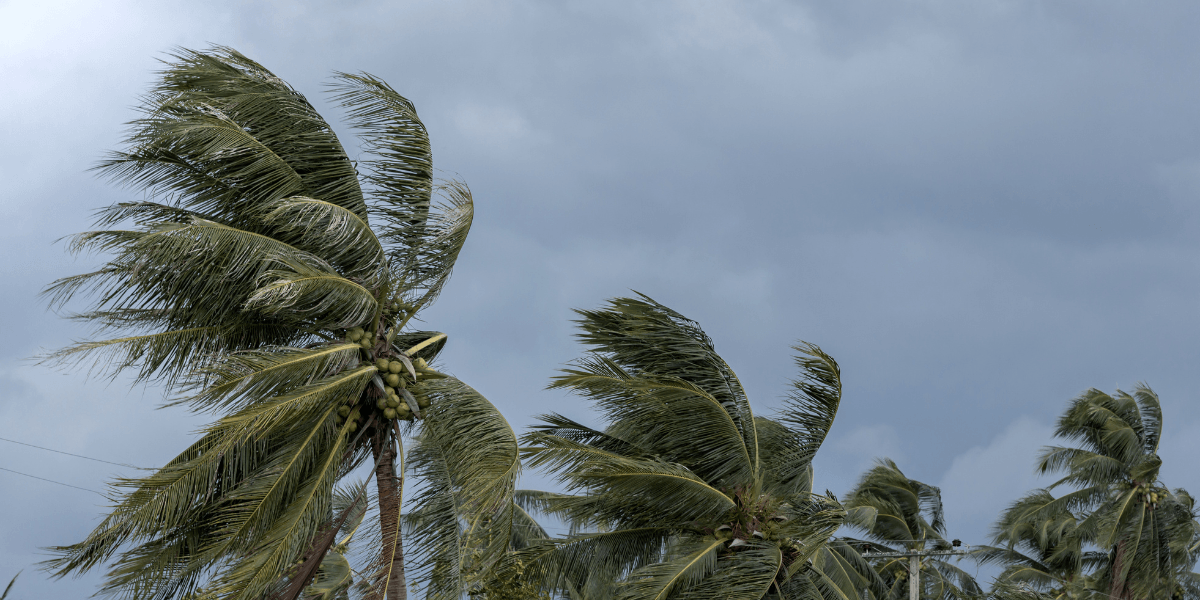
     

    hurricane storm

    Storm-prep investments


    Verizon’s 2026 hurricane season preparations

    In May 2026, Verizon announced a significant leap forward in disaster preparedness ahead of the June 1 start of hurricane season. The announcements are worth understanding in detail because they directly affect whether your 5G home internet stays on during and after a storm.

    Digital Twin technology and AI-powered damage assessment

    One of the biggest delays in restoring cell service after a hurricane is the time required to physically inspect the damage. Crews can’t enter flooded areas or travel impassable roads, so towers sit offline while engineers wait for conditions to improve. Verizon’s new Digital Twin technology solves that problem by using drones to capture before-and-after imagery of cell sites, analyzed by artificial intelligence to identify damage without sending a single crew member into a storm-affected area. The moment a storm passes, Verizon engineers can see exactly which towers are damaged and where repair crews need to go first, compressing what used to be days of assessment into hours.

    Permanent satellite backhaul at storm-prone sites

    Perhaps the most impactful investment for 5G home internet customers is Verizon’s installation of permanent satellite backhaul at macro cell sites across storm-prone areas of the Southeast, combined with 100% backup battery and generator power at these critical locations. These sites are designed to continue processing cellular traffic even if both commercial power and fiber lines are completely destroyed. That means if a hurricane wipes out the fiber infrastructure in your neighborhood and takes down the power grid, a Verizon tower with satellite backhaul and backup power can still serve your 5G home internet gateway, as long as the tower structure itself survives the wind. 

    The Multi-Orbit Off-Road Trailer

    Verizon has also introduced the Multi-Orbit Off-Road Trailer, a high-clearance vehicle purpose-built for disaster zones that can toggle between geostationary (GEO) and low-earth orbit (LEO) satellites to maintain connectivity regardless of which satellite systems are available. The trailer can create localized 5G hotspots for first responders and distribute 5G LEO connection kits to neighborhoods, then move on to restore larger cell sites. Verizon now has a fleet of 2,600 total satellite assets available for disaster response.

    The V Team Disaster Response Corps

    Separately, Verizon launched the V Team Disaster Response Corps in 2026, the first partnership between a telecommunications carrier and the American Red Cross that trains Verizon employee volunteers to deploy to Red Cross disaster shelters for up to two weeks at a time, providing connectivity support directly to affected communities.

    How 5G home internet compares to cable and fiber during a storm

    With cable or fiber, your internet depends on continuous physical infrastructure from the provider’s central office to your house. A downed utility pole between your house and the street, flooding in a cable vault two blocks away, or a generator failure at a local node means your service is gone until a technician can physically reach and repair the break. Since cable companies are dealing with thousands of simultaneous breaks across the affected area, your restoration can take days.

    With 5G home internet, your gateway connects wirelessly to the nearest cell tower. There’s no cable running to your home that can be damaged or flooded. If the tower stays online, you stay online, and Verizon’s 2026 investments in satellite backhaul and backup power are specifically designed to keep towers online when the surrounding infrastructure fails. This is not to say 5G is invincible in a major storm. A direct structural hit to a cell tower can take it out just like anything else, and coverage varies by location. However, as a category, wireless home internet has a structural resilience advantage over wired service during major weather events.

    Verizon 5G Home Internet plans start at $34.99 per month with no annual contract and no data caps, and self-installation takes about 15 minutes. The service is available in all 50 states, though coverage varies by address and is strongest in major metro areas and suburban markets across hurricane-exposed states.

    What hurricane-zone residents should know, by region

    Florida is the most hurricane-exposed state in the country, and Verizon 5G Home Internet is widely available across major Florida markets, including Miami, Tampa, Orlando, and Jacksonville. Spectrum and Xfinity are the dominant cable providers in most Florida markets, and both have histories of extended outages after major storms due to widespread cable damage.

    The Texas Gulf Coast, including Houston, Corpus Christi, and the surrounding area, faces recurring exposure to hurricanes and tropical storms. Verizon 5G is available in the Houston metro area. AT&T Fiber is also present in Texas markets but still depends on physical cable infrastructure, making 5G the more resilient wireless backup during storm events.

    In Louisiana, New Orleans and Baton Rouge have experienced some of the most catastrophic hurricane damage to telecom infrastructure in modern history, with post-Katrina and post-Ida outages lasting weeks in some areas. Verizon 5G Home Internet is increasingly available in both metros, making it a meaningful option for residents who have lived through extended service outages in past storms.

    Along the coasts of Alabama, Mississippi, Georgia, and South Carolina, exposure to hurricanes and tropical storms is real, and Verizon 5G coverage is expanding across markets, including Savannah and Charleston. Residents in smaller coastal communities should check availability at their specific address, as coverage can vary significantly by neighborhood.

    In North Carolina, the Outer Banks, Wilmington, and New Bern are consistently in the path of Atlantic hurricanes. Fiber and cable infrastructure on barrier islands and coastal areas is particularly vulnerable, since those communities often have single-entry service routes that a storm can sever entirely. For Outer Banks residents outside the 5G coverage footprint, Starlink satellite internet is worth serious consideration as a backup.

    In Virginia, Hampton Roads and Virginia Beach face hurricane exposure, and Verizon Fios fiber is widely available in those markets. While Fios is an excellent internet service, it still depends on physical cable infrastructure. Verizon 5G Home Internet can serve as a wireless backup to Fios in these markets, providing a second, independent path to connectivity that survives disruptions to the fiber route.
     

    storm clouds

    Have your backup ready


    How to set up a backup internet for hurricane season

    The most important thing to understand about backup internet is that you need to set it up before a storm threatens, not while it is. Providers are overwhelmed with activation requests during storm alerts, delivery windows stretch out, and you lose the time you need to make sure everything is working. There are three realistic tiers of hurricane-season internet preparedness, depending on your location and budget.

    Your most reliable bet is to run Verizon 5G Home Internet as a backup alongside your existing cable or fiber service. Configure it on a separate router and keep it active. When your primary service goes down, switching over is immediate because you’re not depending on a device that may or may not connect during a storm. At $35 to $60 per month for 5G Home Internet plans, the cost of running two services is modest compared to the cost of being offline for a week after a storm, especially for people who work remotely or have medical equipment that depends on connectivity.

    A 5G mobile hotspot from Verizon is a less ideal but more portable option. It won’t deliver the same consistent speeds as a dedicated home gateway, but it travels with you and provides backup connectivity both at home and along evacuation routes. Verizon has strong 5G and 4G LTE coverage across most major Southeast evacuation corridors.

    For residents in rural coastal areas, barrier islands, and other locations outside the 5G coverage footprint, Starlink is the most viable backup option. Because Starlink operates through a network of low-earth orbit satellites, it has no dependence on any ground-based infrastructure in your area. Starlink residential plans start at $55 per month, with hardware costs separate. It’s an especially relevant option for communities in the Outer Carolinas, rural Louisiana, and inland Texas, where 5G coverage is limited.

    Hurricane Internet Preparedness Checklist

    Check Verizon 5G Home Internet availability at your exact address now, before storm season is active, by entering your zip code below. If 5G Home Internet is available, consider activating it as a backup to your existing cable or fiber service. Self-install takes about 15 minutes, and there are no contracts. 

    If you’re outside 5G coverage, look into Starlink as your backup, or check what other internet providers near you offer wireless or satellite options. Charge backup battery banks and portable power stations before any storm approaches, because even a tower with backup power won’t help you if your gateway device is dead. Download offline maps of your area and evacuation routes before the storm hits, since data speeds can become congested during storm events. Register with your county’s emergency management service for restoration alerts that will tell you when infrastructure is being brought back online in your neighborhood. And know your evacuation route’s cellular coverage before you need it.

    Lower your internet bill

    61% of people overpay for their internet.
    Are you one of them?

    Unlock exclusive offers in your area!

    Call now

    [tel]

    Frequently asked questions

    Does 5G home internet stay on during a hurricane?

    5G home internet is generally more resilient than cable or fiber during hurricanes because it doesn’t depend on physical cables running to your home. As long as the cell tower your gateway connects to remains operational, your service stays on. That said, no internet service is completely storm-proof, and availability and reliability vary by location.

    What is the best backup internet for hurricane season?

    For most households in hurricane-prone areas with 5G coverage, Verizon 5G Home Internet is the best backup internet option because it connects wirelessly to cell towers rather than depending on physical cable infrastructure. Plans start at $35 per month with no contract. For residents outside 5G coverage, particularly in rural coastal areas, Starlink satellite internet is the strongest alternative because it has no dependence on any local ground infrastructure. A 5G mobile hotspot is a useful third option for those who want something portable they can take along if evacuating.

    How should I compare internet providers before hurricane season?

    Start by entering your zip code to see which internet providers serve your address, since availability varies by neighborhood. For hurricane resilience, prioritize wireless options like Verizon 5G Home Internet over cable or fiber for your backup connection. Look at whether providers in your area offer no-contract plans you can activate quickly, and check their track record during previous storms in your region. Compareinternet.com lets you compare internet plans from multiple providers near you side by side, including pricing, speeds, and contract terms.

    Sources

    [1] Verizon.com “Verizon Unveils Digital Twin Technology and Expanded Satellite Fleet in Preparation for the 2026 Hurricane Season.

    [2] NOAA.gov “NOAA Predicts Below-Normal 2026 Atlantic Hurricane Season.

    [3] Cloudflare.com “Forced Offline: The Q3 2024 Internet Disruption Summary.

    [4] Verizon.com “5G Home Internet Plans.

    [5] CableTV.com “Starlink Internet Plans 2026: Pricing, Speeds & Expert Advice.

    [6] USNews.com “Verizon 5G Home Internet Review 2026.

    Explore Our Most Recent Blogs

    Do you want to leave a review for AT&T Internet?

    Caroline Lefelhoc

    About the author

    Caroline Lefelhoc

    Caroline Lefelhoc is a seasoned writer, copywriter, and editor with over five years of experience creating engaging, informative content. She holds a bachelor’s degree in Integrated Marketing Communications from the University of Akron. Notably, she has served as the copywriting director and lead copy editor for the luxury media conglomerate Haute Media Group. In addition to her leadership roles, Caroline is a freelance writer for businesses of all sizes across various industries, including many internet-based companies. Her expertise extends to the technology sector, where she has crafted content for tech startups and SaaS businesses. For CompareInternet.com, she provides helpful insight for consumers on internet technology, trends in remote work and learning, digital opportunity, software and Wi-Fi. Outside work, she enjoys testing new Pinterest recipes and spending time with her family—her husband, their one-year-old daughter, an enthusiastic golden retriever named Beckham, and two cats, Gryffindor and Toast.

    How are You Using the Internet?

    (Please select all that apply)

    How many users?

    Streaming
    Working from Home
    Smart home Devices
    Online Gaming
    Web Browsing

    Your Recommended Speed:
    300 Mbps

    Why we picked this speed for you
      Call now to order [tel] [tel]

      Enter your ZIP code to find all Internet Service Providers available in your area

      Call Now for Exclusive Offers

      Speak with a specialist to unlock deals in your area

      [tel]
      Speed Result

      ✓ No obligation
      ✓ Free consultation
      ✓ Fast connection

      Start Over
      Loading...

      Calculating your best speed...