
Lower your internet bill
61% of people overpay for their internet.
Are you one of them?
Unlock exclusive offers in your area!
Call now
[tel]Enter zip code
DOCSIS 3.0 vs 3.1
", "inLanguage": "en-US" }, { "@type": "BreadcrumbList", "@id": "https://compareinternet.com/blog/docsis-3-0-vs-docsis-3-1/#breadcrumb", "itemListElement": [ { "@type": "ListItem", "position": "1", "item": { "@id": "https://compareinternet.com/", "name": "Home" } }, { "@type": "ListItem", "position": "2", "item": { "@id": "https://compareinternet.com/blog/", "name": "Blog" } }, { "@type": "ListItem", "position": "3", "item": { "@id": "https://compareinternet.com/blog/docsis-3-0-vs-docsis-3-1/", "name": "DOCSIS 3.0 vs 3.1: Which Modem is Best for You?" } } ] }, { "@type": "WebPage", "@id": "https://compareinternet.com/blog/docsis-3-0-vs-docsis-3-1/#webpage", "url": "https://compareinternet.com/blog/docsis-3-0-vs-docsis-3-1/", "name": "DISH vs Cable | Infinity DISH", "datePublished": "2023-11-17T10:08:46+00:00", "dateModified": "2026-06-25T12:30:17+00:00", "isPartOf": { "@id": "https://compareinternet.com//#website" }, "primaryImageOfPage": { "@id": "https://content.isg.us/wp-content/uploads/2023/11/DOCSIS-1-Blue.jpg" }, "inLanguage": "en-US", "breadcrumb": { "@id": "https://compareinternet.com/blog/docsis-3-0-vs-docsis-3-1/#breadcrumb" } }, { "@type": "Person", "@id": "https://compareinternet.com/rosslyn-elliott/", "name": "Rosslyn Elliott", "url": "https://compareinternet.com/rosslyn-elliott/", "image": { "@type": "ImageObject", "@id": "https://content.isg.us/wp-content/uploads/2023/02/Roz-Elliot.jpeg", "url": "https://content.isg.us/wp-content/uploads/2023/02/Roz-Elliot.jpeg", "caption": "Rosslyn Elliott", "inLanguage": "en-US" }, "worksFor": { "@id": "https://compareinternet.com/" } }, { "@type": "BlogPosting", "headline": "DOCSIS 3.0 vs 3.1: Which Modem is Best for You?", "keywords": "DOCSIS 3.0 vs 3.1", "datePublished": "2023-11-17T10:08:46+00:00", "dateModified": "2026-06-25T12:30:17+00:00", "articleSection": "Blog", "author": { "@id": "https://compareinternet.com/rosslyn-elliott/", "name": "Rosslyn Elliott", "url": "https://compareinternet.com/rosslyn-elliott/" }, "publisher": { "@id": "https://compareinternet.com/#organization" }, "description": "Is it time for a new cable modem? Choosing the right DOCSIS standard is important for your internet speed. Learn about DOCSIS 3.0 vs 3.1 in this guide.", "name": "DOCSIS 3.0 vs 3.1: Which Modem is Best for You?", "@id": "https://compareinternet.com/#richSnippet", "isPartOf": { "@id": "https://compareinternet.com/#webpage" }, "image": { "@id": "https://content.isg.us/wp-content/uploads/2023/11/DOCSIS-1-Blue.jpg" }, "inLanguage": "en-US", "mainEntityOfPage": { "@id": "https://compareinternet.com/#webpage" } }, { "@context": "https://schema.org", "@type": "NewsArticle", "articleBody": "<p>Wondering if it’s time for a new modem? Choosing the right DOCSIS standard for your<a href="https://www.compareinternet.com/blog/best-modem-router-combos/" target="_blank" rel="noopener noreferrer"> cable modem</a> is important for your online activities. Your<a href="https://www.cablelabs.com/specifications-library/docsis" target="_blank" rel="noopener noreferrer"> DOCSIS standard</a> determines the maximum internet speeds you can get. DOCSIS 3.0 and<a href="https://www.cablelabs.com/technologies/docsis-3-1" target="_blank" rel="noopener noreferrer"> DOCSIS 3.1</a> support different speed tiers offered by hybrid fiber coaxial (HFC) internet providers. With 3.0, you are limited to plans below 1 Gbps, while 3.1 unlocks gigabit speeds up to 10 Gbps. As cable companies roll out faster plans, your modem will need to be compatible to take advantage of the speed boosts.</p><p>[search_block]</p><h2>What is the DOCSIS Standard?</h2><p>DOCSIS (Data Over Cable Service Interface Specification) is a telecommunications standard that supports high-speed data transfer over existing coaxial cables originally meant for cable TV. DOCSIS allows cable operators to provide broadband Internet access (in addition to TV service) without having to install new<a href="https://www.compareinternet.com/fiber-internet/" target="_blank" rel="noopener noreferrer"> fiber-optic</a> lines into homes.</p><p>DOCSIS works by transforming the analog video signal on the coaxial cable into IP data. Your cable modem decodes this signal to extract the IP packets and send them to devices on your home network.</p><p> </p><p><img loading="lazy" decoding="async" class="alignnone size-full wp-image-2606" src="https://content.isg.us/wp-content/uploads/2023/11/DOCSIS-2-Blue.jpg" alt="DOCSIS button on a computer keyboard" width="1200" height="600" srcset="https://content.isg.us/wp-content/uploads/2023/11/DOCSIS-2-Blue.jpg 1200w, https://content.isg.us/wp-content/uploads/2023/11/DOCSIS-2-Blue-300x150.jpg 300w, https://content.isg.us/wp-content/uploads/2023/11/DOCSIS-2-Blue-1024x512.jpg 1024w, https://content.isg.us/wp-content/uploads/2023/11/DOCSIS-2-Blue-768x384.jpg 768w" sizes="auto, (max-width: 1200px) 100vw, 1200px" /></p><p> </p><h2>The Evolution of DOCSIS Standards</h2><p>The DOCSIS standard has gone through several iterations. Internet speeds listed below are the maximum potential speeds for each DOCSIS standard.<a href="https://www.compareinternet.com/blog/what-is-broadband-definition-and-how-to-get-it/" target="_blank" rel="noopener noreferrer"> Actual speeds</a> will vary depending on your internet plan.</p><table class="compchart" style="width: 91.6464%; background-color: #c3c8f7;"><tbody><tr><td style="width: 21.2585%; text-align: center;"><strong>Standard</strong></td><td style="width: 10.3742%; text-align: center;"><strong>Year</strong></td><td style="width: 43.1155%; text-align: center;"><strong>New features introduced</strong></td><td style="width: 12.2908%; text-align: center;"><strong>Download speed</strong></td><td style="width: 58.0374%; text-align: center;"><strong>Upload speed</strong></td></tr><tr><td style="width: 21.2585%; text-align: center;"><span style="font-weight: 400;">DOCSIS 1.0</span></td><td style="width: 10.3742%; text-align: center;"><span style="font-weight: 400;">1997</span></td><td style="width: 43.1155%; text-align: center;"><span style="font-weight: 400;">First DOCSIS standard</span></td><td style="width: 12.2908%; text-align: center;"><span style="font-weight: 400;">40 Mbps</span></td><td style="width: 58.0374%; text-align: center;"><span style="font-weight: 400;">10 Mbps</span></td></tr><tr><td style="width: 21.2585%; text-align: center;"><span style="font-weight: 400;">DOCSIS 2.0</span></td><td style="width: 10.3742%; text-align: center;"><span style="font-weight: 400;">2001</span></td><td style="width: 43.1155%; text-align: center;"><span style="font-weight: 400;">Supports gaming/streaming</span></td><td style="width: 12.2908%; text-align: center;"><span style="font-weight: 400;">40 Mbps</span></td><td style="width: 58.0374%; text-align: center;"><span style="font-weight: 400;">30 Mbps</span></td></tr><tr><td style="width: 21.2585%; text-align: center;"><span style="font-weight: 400;">DOCSIS 3.0</span></td><td style="width: 10.3742%; text-align: center;"><span style="font-weight: 400;">2006</span></td><td style="width: 43.1155%; text-align: center;"><span style="font-weight: 400;">Support for IPv6*</span></td><td style="width: 12.2908%; text-align: center;"><span style="font-weight: 400;">1 Gbps</span></td><td style="width: 58.0374%; text-align: center;"><span style="font-weight: 400;">100 Mbps</span></td></tr><tr><td style="width: 21.2585%; text-align: center;"><span style="font-weight: 400;">DOCSIS 3.1</span></td><td style="width: 10.3742%; text-align: center;"><span style="font-weight: 400;">2013</span></td><td style="width: 43.1155%; text-align: center;"><span style="font-weight: 400;">OFDM modulation, low latency</span></td><td style="width: 12.2908%; text-align: center;"><span style="font-weight: 400;">10 Gbps</span></td><td style="width: 58.0374%; text-align: center;"><span style="font-weight: 400;">1 Gbps</span></td></tr><tr><td style="width: 21.2585%; text-align: center;"><span style="font-weight: 400;">DOCSIS 4.0</span></td><td style="width: 10.3742%; text-align: center;"><span style="font-weight: 400;">2024</span></td><td style="width: 43.1155%; text-align: center;"><span style="font-weight: 400;">Symmetrical streaming</span></td><td style="width: 12.2908%; text-align: center;"><span style="font-weight: 400;">10 Gbps</span></td><td style="width: 58.0374%; text-align: center;"><span style="font-weight: 400;">6 Gbps</span></td></tr></tbody></table><p> </p><p><em>*IPv6 (Internet Protocol version 6) is a more advanced networking protocol that uses 128-bit IP addresses instead of the 32-bit IP addresses of IPv4.</em></p><p>Each new version maintains backwards compatibility with older DOCSIS equipment.</p><h2>Technical Improvements in DOCSIS 3.1</h2><p>DOCSIS 3.1 introduces major technical upgrades over DOCSIS 3.0:</p><h3>OFDM Modulation</h3><p>DOCSIS 3.1 uses OFDM (Orthogonal Frequency Division Multiplexing) instead of traditional QAM modulation. OFDM packs data more efficiently across a wide spectrum of frequencies, increasing throughput. (Throughput is the actual speed at which data passes over a network.)</p><h3>Low-Latency DOCSIS</h3><p>Specialized low-latency OFDM channels reduce buffering delays, providing the best support for real-time apps like<a href="https://www.compareinternet.com/blog/what-is-the-best-internet-provider-for-gaming-in-my-area/" target="_blank" rel="noopener noreferrer"> online gaming</a>, voice calls, and live streaming.</p><h3>Extended Spectrum</h3><p>DOCSIS 3.1 can use frequencies all the way up to 1.2 GHz, far wider than the max 860 MHz for DOCSIS 3.0. More bandwidth means higher speeds for your data.</p><p> </p><div id="attachment_2608" style="width: 1210px" class="wp-caption alignnone"><img loading="lazy" decoding="async" aria-describedby="caption-attachment-2608" class="size-full wp-image-2608 cap_b cap_cv c_color_w" src="https://content.isg.us/wp-content/uploads/2023/11/DOCSIS-3-Blue.jpg" alt="children playing with a game system and games controllers" width="1200" height="600" srcset="https://content.isg.us/wp-content/uploads/2023/11/DOCSIS-3-Blue.jpg 1200w, https://content.isg.us/wp-content/uploads/2023/11/DOCSIS-3-Blue-300x150.jpg 300w, https://content.isg.us/wp-content/uploads/2023/11/DOCSIS-3-Blue-1024x512.jpg 1024w, https://content.isg.us/wp-content/uploads/2023/11/DOCSIS-3-Blue-768x384.jpg 768w" sizes="auto, (max-width: 1200px) 100vw, 1200px" /><p id="caption-attachment-2608" class="wp-caption-text">Smoother gaming</p></div><p> </p><h2>Performance: DOCSIS 3.0 vs 3.1</h2><p>Thanks to these technical improvements, DOCSIS 3.1 modem performance far surpasses 3.0:</p><ul><li>Download Speeds: DOCSIS 3.1 supports gigabit speeds up to 10 Gbps, 10x faster than DOCSIS 3.0’s max of 1 Gbps.</li><li>Upload Speeds: DOCSIS 3.1 enables upstream bandwidth up to 1-2 Gbps with Full Duplex DOCSIS. 3.0 is limited to 100 Mbps upload.</li><li>Latency: DOCSIS 3.1 has 60-70% lower latency than 3.0, thanks to Low Latency DOCSIS, improving response times.</li><li>Network Capacity: DOCSIS 3.1 boosts capacity up to 50% more on the same spectrum compared to 3.0.</li></ul><h2>Is DOCSIS 3.1 Worth It? Cost-Benefit Analysis</h2><p>Upgrading your modem to DOCSIS 3.1 only benefits users subscribed to gigabit-tier internet plans from their cable<a href="https://www.compareinternet.com/blog/fastest-internet-providers/" target="_blank" rel="noopener noreferrer"> provider</a>.</p><p>For standard plans below 1 Gbps, DOCSIS 3.0 modems can easily handle the speeds. The average $150 cost of a new DOCSIS 3.1 modem may not justify the upgrade. If your internet tends to be<a href="https://www.compareinternet.com/blog/why-is-my-internet-so-slow-complete-troubleshooting-guide/" target="_blank" rel="noopener noreferrer"> really slow</a>, then you may want to investigate the causes before upgrading.</p><p>However, DOCSIS 3.1 future-proofs your home network. As hybrid fiber coaxial (HFC) internet speeds steadily increase, a 3.1 modem will be compatible with multi-gig plans. The more data your<a href="https://www.compareinternet.com/blog/average-data-usage-per-month-home-internet/" target="_blank" rel="noopener noreferrer"> household uses</a> per month, and the more devices you have connected at once, the more likely it is that you will want to upgrade.</p><p> </p><div id="attachment_2609" style="width: 1210px" class="wp-caption alignnone"><img loading="lazy" decoding="async" aria-describedby="caption-attachment-2609" class="size-full wp-image-2609 cap_c cap_cv c_color_w" src="https://content.isg.us/wp-content/uploads/2023/11/DOCSIS-4-Blue.jpg" alt="multiple devices including smartphone and computer monitor sitting on desks" width="1200" height="600" srcset="https://content.isg.us/wp-content/uploads/2023/11/DOCSIS-4-Blue.jpg 1200w, https://content.isg.us/wp-content/uploads/2023/11/DOCSIS-4-Blue-300x150.jpg 300w, https://content.isg.us/wp-content/uploads/2023/11/DOCSIS-4-Blue-1024x512.jpg 1024w, https://content.isg.us/wp-content/uploads/2023/11/DOCSIS-4-Blue-768x384.jpg 768w" sizes="auto, (max-width: 1200px) 100vw, 1200px" /><p id="caption-attachment-2609" class="wp-caption-text">Multiple devices</p></div><p> </p><h2>The Path Forward: DOCSIS 4.0</h2><p><a href="https://www.cablelabs.com/technologies/docsis-4-0-technology" target="_blank" rel="noopener noreferrer">DOCSIS 4.0</a> builds on 3.1 with a major new feature – Full Duplex DOCSIS. This standard will enable symmetrical multi-gigabit speeds up to 10 Gbps download speed and 6 Gbps upload speed.</p><p>Other DOCSIS 4.0 enhancements include unified IoT support, Wi-Fi 6/6E integration, and better security. Public release of DOCSIS 4.0 modems is likely to begin in 2024.</p><h2>Key Takeaways for DOCSIS 3.0 vs. 3.1</h2><ul><li>DOCSIS 3.1 supports 10x faster gigabit speeds than 3.0, but upgrading only benefits gigabit subscribers.</li><li>OFDM modulation and extended frequencies support higher throughputs.</li><li>Low-latency DOCSIS reduces<a href="https://www.compareinternet.com/blog/high-speed-internet-slow-buffering/" target="_blank" rel="noopener noreferrer"> buffering</a> for real-time apps.</li><li>A 3.1 modem future-proofs your home network for faster internet speeds.</li></ul><p> </p><div id="attachment_2610" style="width: 1210px" class="wp-caption alignnone"><img loading="lazy" decoding="async" aria-describedby="caption-attachment-2610" class="cap_c cap_cv c_color_w wp-image-2610 size-full" src="https://content.isg.us/wp-content/uploads/2023/11/DOCSIS-6-Blue.jpg" alt="cable modem in home on counter" width="1200" height="600" srcset="https://content.isg.us/wp-content/uploads/2023/11/DOCSIS-6-Blue.jpg 1200w, https://content.isg.us/wp-content/uploads/2023/11/DOCSIS-6-Blue-300x150.jpg 300w, https://content.isg.us/wp-content/uploads/2023/11/DOCSIS-6-Blue-1024x512.jpg 1024w, https://content.isg.us/wp-content/uploads/2023/11/DOCSIS-6-Blue-768x384.jpg 768w" sizes="auto, (max-width: 1200px) 100vw, 1200px" /><p id="caption-attachment-2610" class="wp-caption-text">Future-proof your modem</p></div><p> </p><h2>FAQs: DOCSIS 3.0 vs 3.1</h2><h3>Does a router work on DOCSIS standards?</h3><p>No, DOCSIS standards only apply to cable modems, not routers. A router connects to the modem and does not care what DOCSIS version the modem uses. Any Wi-Fi router is compatible with DOCSIS 3.0/3.1 modems.</p><h3>DO DSL modems work on DOCSIS standards?</h3><p>No, DSL modems have their own technology. DOCSIS standards only apply to internet delivered by coaxial cable and<a href="https://www.compareinternet.com/blog/what-is-hybrid-fiber-coaxial-hfc/" target="_blank" rel="noopener noreferrer"> hybrid fiber-coaxial</a> (HFC).</p><h3>Is a DOCSIS 3.1 modem compatible with DOCSIS 3.0 internet service?</h3><p>Yes, DOCSIS 3.1 modems are backward-compatible and will work fine with older DOCSIS 3.0 cable networks. A 3.1 modem will flex down to 3.0 speeds.</p><h3>Can I upgrade to DOCSIS 3.1 if my provider only offers DOCSIS 3.0 internet plans?</h3><p>You can use a 3.1 modem, but you won’t see any speed improvement on a 3.0 network. Only upgrade the modem if your provider launches gigabit plans over DOCSIS 3.1.</p><h3>What is the cost difference between DOCSIS 3.0 and 3.1 modems?</h3><p>DOCSIS 3.1 modems typically cost $150-$200, around $50-$100 more than DOCSIS 3.0 models priced at $100-$150. The premium provides future-proofing. If you’re already<a href="https://www.compareinternet.com/blog/how-to-save-money-on-your-internet-bill/" target="_blank" rel="noopener noreferrer"> paying</a> for a multigig internet plan, you will definitely want a 3.1 modem or even a 4.0 as they begin to hit the market.</p><p>[search_block]</p><p> </p>", "headline": "DOCSIS 3.0 vs 3.1: Which Modem is Best for You?", "articleSection": "Gear & Equipment", "datePublished": "2023-11-17T10:08:46+00:00", "dateModified": "2026-06-25T12:30:17+00:00", "publisher": [{ "@type": "Organization", "name": "Compare Internet", "logo": { "@type": "ImageObject", "url": "https://www.compareinternet.com/wp-content/uploads/2023/02/Compare-Internet-white.png", "width": 1350, "height": 360 }, "alternateName": "Compare Internet" }], "author": [{ "@type": "Person", "name": "Rosslyn Elliott", "url": "https://compareinternet.com/authors/rosslyn-elliott/", "jobTitle": "Rosslyn Elliott", "image": { "@type": "ImageObject", "url": "https://content.isg.us/wp-content/uploads/2023/02/Roz-Elliot.jpeg", "height": 337, "width": 337 } }], "image": [{ "@type": "ImageObject", "url": "https://content.isg.us/wp-content/uploads/2023/11/DOCSIS-1-Blue.jpg", "height": 1200, "width": 750 }], "description": "DOCSIS 3.0 vs 3.1: Which Modem is Best for You?", "wordCount": "1903", "mainEntityOfPage": "https://compareinternet.com/blog/docsis-3-0-vs-docsis-3-1/" } ] } Use code: KALA & receive a $50 gift card with your order!
 Are you happy with your Internet service?

About the author
Wondering if it’s time for a new modem? Choosing the right DOCSIS standard for your cable modem is important for your online activities. Your DOCSIS standard determines the maximum internet speeds you can get. DOCSIS 3.0 and DOCSIS 3.1 support different speed tiers offered by hybrid fiber coaxial (HFC) internet providers. With 3.0, you are limited to plans below 1 Gbps, while 3.1 unlocks gigabit speeds up to 10 Gbps. As cable companies roll out faster plans, your modem will need to be compatible to take advantage of the speed boosts.
61% of people overpay for their internet.
Are you one of them?
Unlock exclusive offers in your area!
Call now
[tel]Enter zip code
DOCSIS (Data Over Cable Service Interface Specification) is a telecommunications standard that supports high-speed data transfer over existing coaxial cables originally meant for cable TV. DOCSIS allows cable operators to provide broadband Internet access (in addition to TV service) without having to install new fiber-optic lines into homes.
DOCSIS works by transforming the analog video signal on the coaxial cable into IP data. Your cable modem decodes this signal to extract the IP packets and send them to devices on your home network.

The DOCSIS standard has gone through several iterations. Internet speeds listed below are the maximum potential speeds for each DOCSIS standard. Actual speeds will vary depending on your internet plan.
| Standard | Year | New features introduced | Download speed | Upload speed |
| DOCSIS 1.0 | 1997 | First DOCSIS standard | 40 Mbps | 10 Mbps |
| DOCSIS 2.0 | 2001 | Supports gaming/streaming | 40 Mbps | 30 Mbps |
| DOCSIS 3.0 | 2006 | Support for IPv6* | 1 Gbps | 100 Mbps |
| DOCSIS 3.1 | 2013 | OFDM modulation, low latency | 10 Gbps | 1 Gbps |
| DOCSIS 4.0 | 2024 | Symmetrical streaming | 10 Gbps | 6 Gbps |
*IPv6 (Internet Protocol version 6) is a more advanced networking protocol that uses 128-bit IP addresses instead of the 32-bit IP addresses of IPv4.
Each new version maintains backwards compatibility with older DOCSIS equipment.
DOCSIS 3.1 introduces major technical upgrades over DOCSIS 3.0:
DOCSIS 3.1 uses OFDM (Orthogonal Frequency Division Multiplexing) instead of traditional QAM modulation. OFDM packs data more efficiently across a wide spectrum of frequencies, increasing throughput. (Throughput is the actual speed at which data passes over a network.)
Specialized low-latency OFDM channels reduce buffering delays, providing the best support for real-time apps like online gaming, voice calls, and live streaming.
DOCSIS 3.1 can use frequencies all the way up to 1.2 GHz, far wider than the max 860 MHz for DOCSIS 3.0. More bandwidth means higher speeds for your data.

Smoother gaming
Thanks to these technical improvements, DOCSIS 3.1 modem performance far surpasses 3.0:
Upgrading your modem to DOCSIS 3.1 only benefits users subscribed to gigabit-tier internet plans from their cable provider.
For standard plans below 1 Gbps, DOCSIS 3.0 modems can easily handle the speeds. The average $150 cost of a new DOCSIS 3.1 modem may not justify the upgrade. If your internet tends to be really slow, then you may want to investigate the causes before upgrading.
However, DOCSIS 3.1 future-proofs your home network. As hybrid fiber coaxial (HFC) internet speeds steadily increase, a 3.1 modem will be compatible with multi-gig plans. The more data your household uses per month, and the more devices you have connected at once, the more likely it is that you will want to upgrade.

Multiple devices
DOCSIS 4.0 builds on 3.1 with a major new feature – Full Duplex DOCSIS. This standard will enable symmetrical multi-gigabit speeds up to 10 Gbps download speed and 6 Gbps upload speed.
Other DOCSIS 4.0 enhancements include unified IoT support, Wi-Fi 6/6E integration, and better security. Public release of DOCSIS 4.0 modems is likely to begin in 2024.
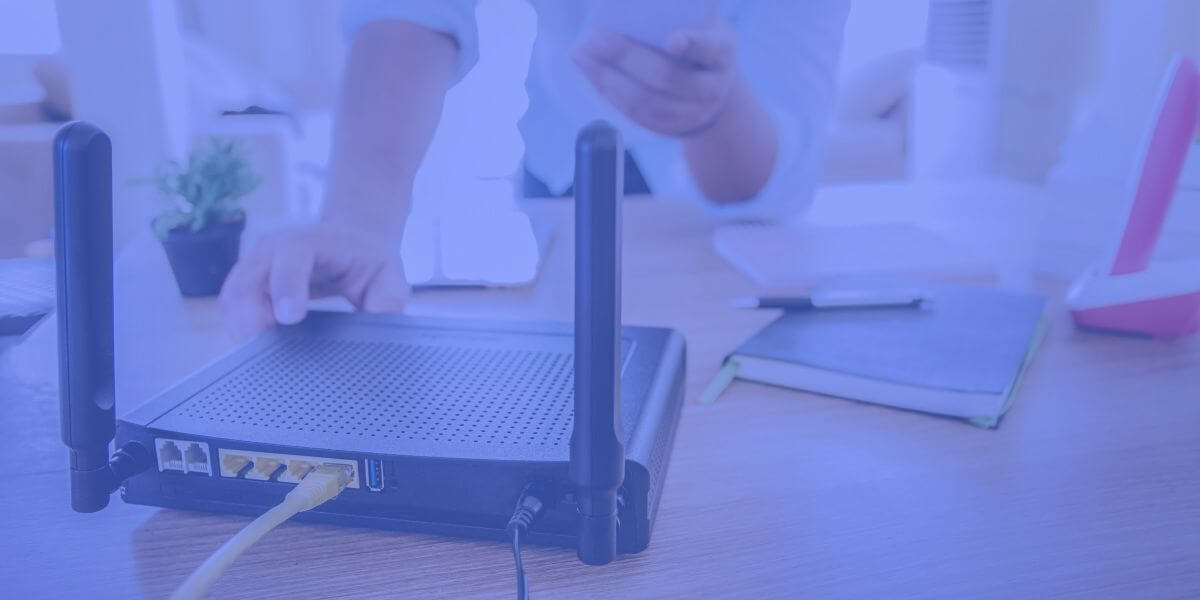
Future-proof your modem
No, DOCSIS standards only apply to cable modems, not routers. A router connects to the modem and does not care what DOCSIS version the modem uses. Any Wi-Fi router is compatible with DOCSIS 3.0/3.1 modems.
No, DSL modems have their own technology. DOCSIS standards only apply to internet delivered by coaxial cable and hybrid fiber-coaxial (HFC).
Yes, DOCSIS 3.1 modems are backward-compatible and will work fine with older DOCSIS 3.0 cable networks. A 3.1 modem will flex down to 3.0 speeds.
You can use a 3.1 modem, but you won’t see any speed improvement on a 3.0 network. Only upgrade the modem if your provider launches gigabit plans over DOCSIS 3.1.
DOCSIS 3.1 modems typically cost $150-$200, around $50-$100 more than DOCSIS 3.0 models priced at $100-$150. The premium provides future-proofing. If you’re already paying for a multigig internet plan, you will definitely want a 3.1 modem or even a 4.0 as they begin to hit the market.
61% of people overpay for their internet.
Are you one of them?
Unlock exclusive offers in your area!
Call now
[tel]Enter zip code
Do you want to leave a review for AT&T Internet?
About the author

Infinity Sales Group, LLC